Homeowners are looking at outdoor spaces differently these days. Not long ago, concrete pavers and manufactured stone products were the go-to choice for many hardscaping projects. Now, more homeowners are moving away from that formula. Instead, they’re asking a different question: What are the best natural materials in hardscaping? The answer usually comes back to materials that don’t look manufactured in the first place. Materials that weather naturally. Develop character. Fit the landscape instead of competing with it.
That’s one reason biophilic design has gained so much traction. People want indoor-outdoor living spaces that feel connected to nature, not separated from it. They want organic textures underfoot. Real materials. Lasting performance. A backyard that doesn’t feel like every other backyard on the block. In hardscape design Yolo County homeowners are investing in, natural stone, basalt, and wood continue to stand out for exactly those reasons.
So, what are natural hardscaping materials? Simply put, they’re materials taken from nature rather than manufactured to imitate it. Natural stone brings durability and timeless appeal. Wood adds warmth and texture. Basalt offers strength, clean lines, and a distinctive look that works in both traditional and modern landscapes. Yolo Landscape designs and builds natural hardscaping projects throughout Woodland, Davis, West Sacramento, and Winters, creating outdoor spaces that look right at home from day one and still look good years later.
Why Homeowners Are Moving Away From Manufactured Hardscape Finishes
Manufactured hardscape finishes include concrete pavers, cast stone, porcelain products, and other factory-made materials designed to imitate natural surfaces. For years, they dominated residential projects because they were affordable, uniform and easy to source.
Why Manufactured Pavers Don’t Always Age Well
The biggest complaint usually shows up years later. Manufactured pavers fade and crack over time. In the Sacramento Valley, constant sun exposure speeds up UV degradation. Colors lose depth. Edges chip. Some manufactured concrete surfaces also absorb significant heat, making patios and walkways less comfortable during summer afternoons. This is one reason the conversation around manufactured stone vs natural stone has become more common among homeowners planning outdoor upgrades.
Why Natural Materials Feel More Authentic
The shift isn’t only about durability. People want outdoor spaces with character. Not every stone matching perfectly. Not every surface looking factory-made. That preference aligns with biophilic design, which encourages stronger connections to nature through organic textures and natural materials. Natural stone, basalt, and reclaimed wood offer variation that manufactured products simply can’t reproduce. Sustainability matters too. Many homeowners now consider carbon footprint, lower embodied carbon, and long-term replacement costs instead of focusing only on upfront pricing. That’s helping drive the move toward natural vs manufactured hardscape finishes across Yolo County and the Sacramento Valley.
Why Choose Natural Stone Hardscaping in Yolo County?
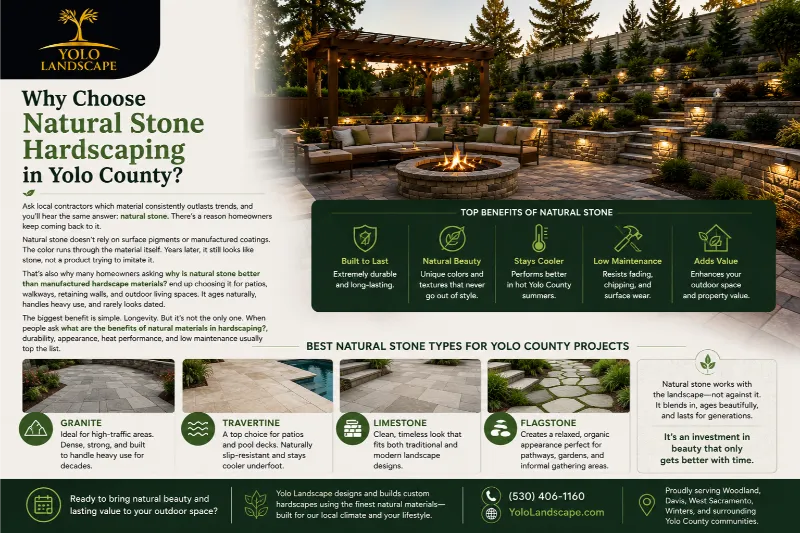
Ask local contractors which material consistently outlasts trends, and you’ll hear the same answer: natural stone. There’s a reason homeowners keep coming back to it. Natural stone doesn’t rely on surface pigments or manufactured coatings. The color runs through the material itself. Years later, it still looks like stone, not a product trying to imitate it. That’s also why many homeowners asking why is natural stone better than manufactured hardscape materials? end up choosing it for patios, walkways, retaining walls, and outdoor living spaces. It ages naturally, handles heavy use, and rarely looks dated.
The biggest benefit is simple. Longevity. But it’s not the only one. When people ask what are the benefits of natural materials in hardscaping?, durability, appearance, heat performance, and low maintenance usually top the list.
Best Natural Stone Types for Yolo County Projects
Across Yolo County, Woodland, Davis, West Sacramento, Winters, and the wider Sacramento Valley, a few stone choices consistently stand out. Granite works well in high-traffic areas because it’s dense and highly durable. Travertine remains a favorite for patios and pool decks thanks to its natural slip resistance and cooler surface temperatures. Limestone offers a clean appearance that fits both traditional and modern landscapes. Flagstone creates a relaxed, organic look that works beautifully for pathways, garden transitions, and informal gathering areas.
What Is the Best Natural Stone for Patios in Hot Climates?
For most homeowners in Central Valley California, travertine is hard to beat. Travertine reflects heat, which helps keep surfaces more comfortable during summer. The same is true for many lighter-toned natural stone options. Because lighter-toned natural stone reflects heat more effectively than darker materials, patios stay noticeably cooler during peak afternoon temperatures. Natural stone also benefits from thermal mass. It absorbs heat gradually instead of spiking in temperature as quickly as many manufactured surfaces.
How Natural Stone Performs in Sacramento Valley Summers
Summer conditions can be demanding. According to climate data published by NOAA, prolonged heat and strong sun exposure are common throughout the region. That’s where natural stone performs well. Its UV resistance helps preserve appearance over time. Strong heat reflection properties reduce surface temperature on lighter stones. And because the Sacramento Valley experiences a dry climate with limited freeze-thaw cycles, stone faces less expansion stress than it would in colder regions. Most installations require very little upkeep. A quality stone sealant and periodic sealing every few years is often enough to maintain appearance and performance for decades.
Wood in Hardscaping: Practical Design Ideas That Actually Last
Wood makes a lot of homeowners nervous, mostly because they’ve seen it fail. A warped planter, a rotting border, a deck that looked rough after a few seasons. Usually, the problem wasn’t wood itself, it was the wrong wood in the wrong spot. That’s why people still ask, are wood elements practical in modern hardscape design? They are, just not as a replacement for stone. Wood works best when it’s used as an accent, raised planters, and garden borders. Pergolas, seating areas, places where a little warmth goes a long way. In fact, some of the best wood hardscaping ideas for outdoor spaces pair wood with natural stone instead of choosing one over the other. The contrast feels balanced, less rigid, more connected to the landscape.
Best Wood Species for Outdoor Hardscaping
Not all wood performs the same outdoors. Cedar hardscaping remains a favorite because cedar naturally resists insects and decay. It works well for planter beds, walkway borders, and garden edging. Teak hardscaping has a different look. Dense grain, strong weather resistance. Often used for benches, accent structures, and custom details. Then there’s ipe hardscaping. Ipe wood is incredibly dense and known for its long lifespan. Homeowners often use it where durability matters most and replacement isn’t something they want to think about for years. Reclaimed timber is finding its way into more projects, too. A little weathering. A little history. Character you can’t buy off a shelf.
Wood vs Composite Decking: Which Makes More Sense?
The wood vs composite outdoor conversation isn’t really about which material wins. It’s about priorities, composite decking asks less from you. Less maintenance, less staining, less upkeep. Natural wood gives something back in return. Real grain, natural texture and variation from board to board. Wood sealing still matters, so does routine maintenance. That’s part of owning a natural material. For many homeowners, that’s a trade worth making. Especially in durable outdoor wood applications where appearance carries just as much weight as longevity.
Are Basalt Pavers Good for Outdoor Design?
Basalt wasn’t showing up in many residential projects a decade ago. Now it’s hard to ignore. Homeowners looking for something cleaner and more contemporary keep coming back to it. That’s one reason people frequently ask, are basalt pavers good for outdoor design? For the right project, absolutely. Basalt is a naturally occurring volcanic rock formed when lava cools and hardens. As an igneous volcanic rock, it’s known for strength, density, and durability. It also has a look that’s difficult to replicate, deep charcoal tones, subtle variation, and clean lines. If travertine feels relaxed and traditional, basalt feels modern.
Many homeowners also ask, how does basalt perform in outdoor hardscape projects? Very well, it’s a dense stone with low porosity, which helps it resist wear, moisture, and surface deterioration over time. The naturally textured finish creates a slip-resistant surface, making it a practical option around pools and outdoor gathering spaces.
What Is Basalt Used for in Landscaping?
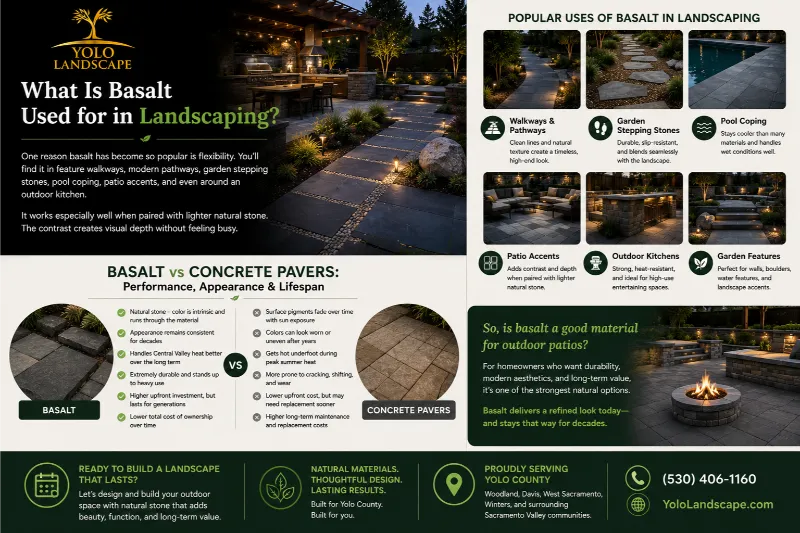
One reason basalt has become so popular is flexibility. You’ll find it in feature walkways, modern pathways, garden stepping stones, pool coping, patio accents, and even around an outdoor kitchen. It works especially well when paired with lighter natural stone. The contrast creates visual depth without feeling busy.
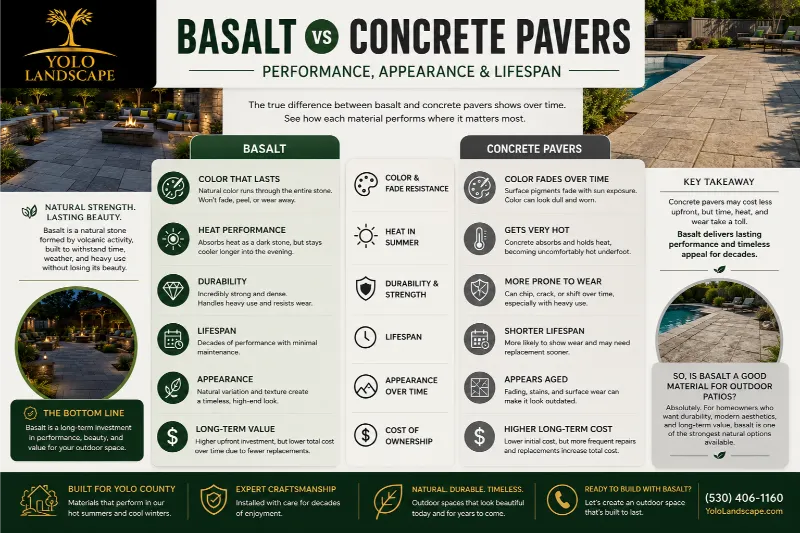
Basalt vs Concrete Pavers: Performance, Appearance & Lifespan
The basalt vs concrete pavers comparison becomes more interesting over time. Basalt doesn’t rely on surface pigments. The natural stone color is intrinsic, meaning the color runs through the material itself. Concrete works differently. After years of sun exposure, fading becomes noticeable. In Central Valley summers, concrete gets uncomfortably hot underfoot during peak afternoon heat.
Basalt absorbs heat too because it’s a dark stone, but its appearance remains consistent for decades. The upfront investment is higher. No surprise there. But basalt’s long lifecycle often leads to a lower total cost of ownership because replacement cycles are far less frequent. So, is basalt a good material for outdoor patios? For homeowners who want durability, modern aesthetics, and long-term value, it’s one of the strongest natural options available.
Natural vs Manufactured Hardscape Finishes: Side-by-Side Comparison
By this point, the difference is pretty clear. When homeowners ask, What are the best natural materials in hardscaping?, they’re usually comparing long-term performance rather than installation cost. Natural stone, basalt, and wood often require a larger upfront investment, but they tend to age better, maintain their appearance longer, and avoid the replacement cycles common with manufactured stone and concrete pavers.
| Factor | Natural Stone / Basalt / Wood | Manufactured Stone / Concrete Pavers |
| Lifespan | 50–100+ years | 20–30 years |
| Maintenance | Periodic sealing and basic upkeep | Repairs and replacement become more common over time |
| Heat Performance | Lighter stones stay cooler underfoot | Darker surfaces often retain more heat |
| Sustainability | Long lifecycle and fewer replacement cycles | Higher material turnover |
| Color Retention | Natural stone color remains consistent | Surface pigments gradually fade |
| Resale Value | Strong appeal to future buyers | Moderate impact |
| Cost Over Time | Lower long-term ownership costs | Higher replacement costs over decades |
The upfront price tag doesn’t tell the whole story. Over twenty years, durability, appearance, and maintenance often matter more than the initial installation cost. That’s where natural materials tend to separate themselves from manufactured alternatives.
Which Natural Material Is Right for Your Project?
By this point, the question usually isn’t whether to choose natural materials. It’s which one fits the space. A large entertaining area or paver patio often benefits from natural stone. Materials like travertine and limestone stay comfortable in the summer and work with almost any architectural style. That’s why they’re often considered the best natural hardscaping material for everyday outdoor living.
For a walkway, the choice often comes down to appearance. Flagstone feels relaxed and informal. Basalt creates a cleaner, more contemporary look. Building an outdoor kitchen? Many homeowners mix materials instead of relying on one. Natural stone for the main surfaces. Basalt accents for contrast and detail. Wood enters the conversation differently. A pergola, raised planter, or garden border can feel a little cold when built entirely from stone. Cedar and ipe soften the space and add texture that manufactured products struggle to replicate.
The same idea applies to a retaining wall. Granite and natural stone bring durability, while wood elements nearby can make the overall design feel more inviting. That’s why the decision rarely comes down to natural stone or basalt or wood. How are stone, wood, and basalt used in hardscaping? In many projects, each material serves a different purpose. Natural stone often anchors patios and retaining walls, basalt works well for walkways and contemporary accents, while wood adds warmth to pergolas, garden borders, and raised planters.
Do Natural Materials Increase Property Value?
Walk through two similar homes. One has a weathered concrete patio with fading color and uneven pavers. The other has a well-built Natural stone patio Sacramento Valley that’s settled comfortably into the landscape. Most buyers notice the difference immediately. So, does natural stone increase property value? In many cases, yes. Not because buyers are calculating exact numbers on the spot. Because natural materials tend to create a stronger first impression.
That’s especially true in the California real estate market, where outdoor living plays a bigger role in how people use their homes. A thoughtfully designed patio, walkway, or gathering space often feels like an extension of the house rather than an afterthought. There’s also the maintenance factor. Buyers can usually spot deferred maintenance. They can also recognize quality materials that have held up over time. Natural stone often falls into that second category. The conversation around value isn’t only about resale value or ROI, either. Many homeowners view hardscaping as an outdoor living investment they’ll enjoy for years before selling.
Sustainability enters the picture as well. When people ask, what are the most sustainable hardscaping materials?Natural stone is usually part of the discussion because of its long lifespan, fewer replacement cycles, and relatively lower embodied carbon compared to repeatedly replacing manufactured materials.
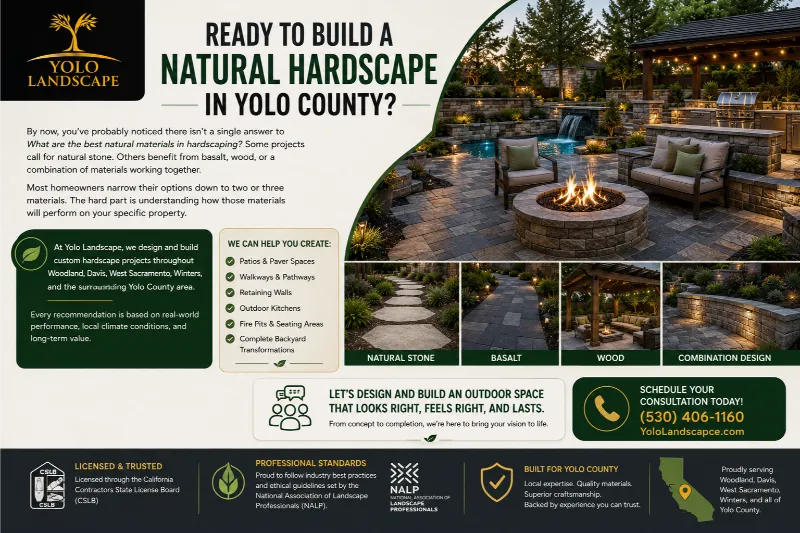
Ready to Build a Natural Hardscape in Yolo County?
By now, you’ve probably noticed there isn’t a single answer to What are the best natural materials in hardscaping? Some projects call for natural stone. Others benefit from basalt, wood, or a combination of materials working together. Most homeowners narrow their options down to two or three materials. The hard part is understanding how those materials will perform on your specific property.
At Yolo Landscape, we design and build custom hardscape projects throughout Woodland, Davis, West Sacramento, Winters, and the surrounding Yolo County area. Every recommendation is based on real-world performance, local climate conditions, and long-term value. If you’re planning a patio, walkway, retaining wall, outdoor kitchen, or complete backyard transformation, our team can help you explore the options and build a space that feels right from day one and still performs years down the road.
Licensed through the California Contractors State License Board (CSLB) and guided by industry standards promoted by the National Association of Landscape Professionals (NALP).