
Last February, a homeowner in Woodland called us in a panic. A large elm branch had come down overnight during a wind event and punched through the corner of his garage roof. The branch had been visibly cracked for over a year. His neighbor had pointed it out twice. But he kept putting the trim off, thinking he would get to it after summer.
That single delay cost him over $4,000 in repairs. His insurance company reduced the payout after determining the branch showed evidence of long-term neglect.
Here is the thing most homeowners do not realize: tree damage is not usually caused by storms. It is caused by trimming at the wrong time, or not trimming at all, until a storm finishes the job for you. Getting the timing right on tree trimming in Yolo County is what separates a healthy, safe property from an expensive repair bill waiting to happen.
So when exactly should you trim? The answer depends on your tree species, the season, and some specific quirks of Yolo County’s climate that most national gardening guides completely ignore. Let’s go through all of it.
Executive Summary
The best time to trim trees in Yolo County is late winter, roughly January through early March, when most species are dormant, wounds close faster, and pest activity is at its lowest. Oak trees follow a different schedule entirely and should be pruned in summer, between July and October, to avoid Sudden Oak Death and bark beetle exposure. Fruit trees need late winter pruning before new buds form. Emergency tree trimming is appropriate any season when safety is at risk.
This guide covers the full season-by-season breakdown, a month-by-month tree-trimming calendar specific to Yolo County, the biggest mistakes homeowners make, and clear guidance on when to call a certified arborist versus handle things yourself.
When Is the Best Time to Trim Trees in Yolo County?
The short answer most people want is late winter, January through early March. But the longer answer is more useful.
Yolo County sits in the Central Valley of Northern California, which creates a trimming rhythm that does not match the advice you find in general gardening articles written for national audiences. The combination of hot, dry summers and mild, wet winters means your trees cycle through stress differently than trees in coastal or mountain climates.
Why Local Climate Changes Pruning Schedules
During Yolo County’s summer months, temperatures in Woodland, Davis, and Winters regularly exceed 100°F. Fresh pruning cuts made in that heat struggle to callous properly. Moisture evaporates from exposed wood too quickly, and the open wounds become an invitation for insects and fungal spores that thrive in the Central Valley heat.
Late winter avoids all of that. The trees are dormant or near-dormant. Sap flow is low. Wounds close before spring warmth activates pest populations. And without leaves blocking the view, your arborist or tree crew can actually see the full branch structure clearly.
How Yolo County Differs from Other California Regions
Coastal California has different advice because coastal trees experience less extreme seasonal shifts. Southern California has different timing because their winters are warmer. Yolo County’s sharp contrast between a hot, dry summer and a cooler, sometimes frosty winter creates a much more defined dormant window that you should take advantage of.
The University of California Agriculture and Natural Resources program consistently recommends late dormancy pruning for the Central Valley specifically because of how aggressively bark beetles and fungal diseases spread in warm conditions.
Why Does Tree Trimming Timing Matter So Much?
You could argue that a branch is a branch, and cutting it off is cutting it off. In practice, timing changes everything about how the tree responds.
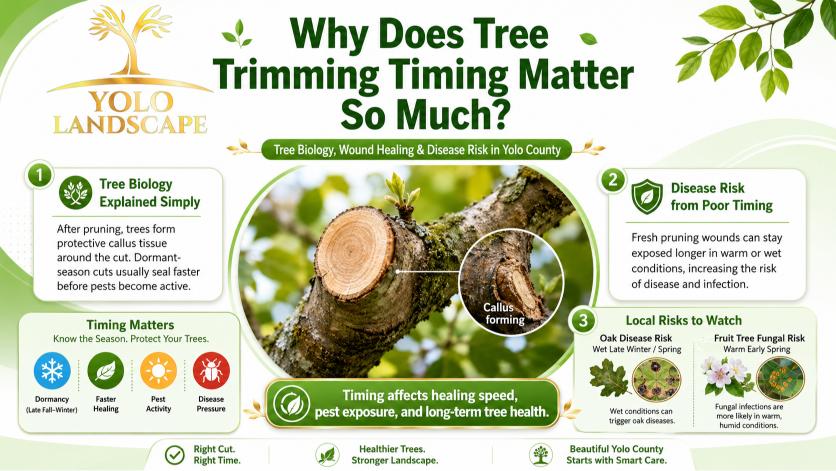
Tree Biology Explained Simply
Trees do not bleed the way people do, but they do respond to wounds. When a branch is removed, the tree begins producing a callous tissue around the cut to seal the wound. How quickly that happens depends heavily on the time of year. Cuts made during dormancy close before warm-weather pests become active. Cuts made in summer close slowly, and the exposed wood sits vulnerable for longer.
Disease Risks from Poor Timing
Sudden Oak Death, caused by the pathogen Phytophthora ramorum, spreads most aggressively through fresh pruning wounds made during the wet, cool months of late winter and spring in oak tree populations. Fungal infections like fire blight spread rapidly through fresh fruit tree cuts made when temperatures are warm and humid in early spring.
Pest Infestations Linked to Pruning Mistakes
Bark beetles are one of the most destructive pests in Northern California, and they are drawn to fresh tree wounds. Cutting oak trees between November and June when bark beetles are most active dramatically increases the chance of infestation. This is not a theoretical risk. Bark beetle damage has killed thousands of oaks across California in recent years, and improper pruning timing is a documented contributing factor.
What Makes Winter the Best Season for Most Tree Trimming?
Winter is the safest and most productive window for seasonal tree maintenance in Yolo County, and not just because of dormancy. There are practical advantages that stack up quickly.
Dormant Season Advantages
During dormancy, trees are not spending energy on leaf production, fruit development, or active growth. When you remove a branch in this state, the tree directs its spring energy toward healthy regrowth rather than trying to compensate for a wound during active growth. The result is stronger, more structurally sound development when spring arrives.
Better Wound Recovery
Callous tissue forms most efficiently just before the spring growth surge. Pruning in January or February means the wound gets sealed as the tree wakes up and sap begins flowing. That timing is almost perfect from a biological standpoint.
Easier Branch Inspection
With leaves gone from deciduous trees, every branch is visible. Dead wood, crossing branches, structurally weak crotches, and storm-risk limbs are all easy to identify and address. Trying to assess the same structure through a full summer canopy is genuinely difficult, even for experienced crews.
Which Trees Should Be Pruned During Late Winter?
Shade Trees and Deciduous Trees
Maple, cottonwood, and other common Yolo County shade trees all benefit from late winter structural pruning. Remove dead and crossing branches first, then shape for clearance and airflow.
Structural Pruning for Young Trees
Young trees need early shaping to develop good structure before they grow large enough to become hazards. Late winter pruning in the first three to five years sets the branch architecture that determines whether the tree stays safe and manageable for decades. This is one of the highest-value investments in tree health maintenance you can make.
When Should Fruit Trees Be Trimmed in Yolo County?
Fruit tree pruning in California follows a tighter timing window than most homeowners realize. Get it wrong and you sacrifice either the harvest or the tree’s long-term health.
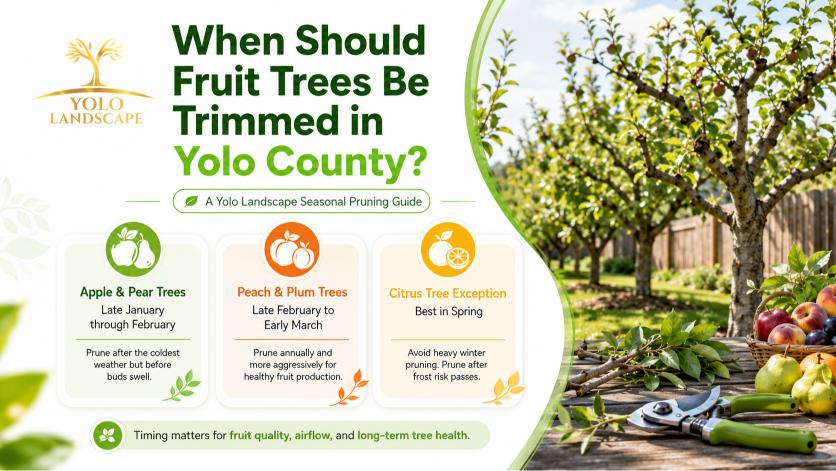
Apple and Pear Trees
Prune in late January through February, after the coldest weather passes but before buds begin swelling. Removing old wood now encourages the tree to concentrate energy on producing fruit on newer growth. Opening the canopy also improves sunlight penetration and air circulation, which reduces fungal pressure during the growing season.
Peach and Plum Trees
These need more aggressive annual pruning than most homeowners give them. Prune in late February to early March in Yolo County. Peach trees, especially, produce fruit only on one-year-old wood, so removing older wood each year is not optional. It is how the tree continues producing.
Citrus Tree Exceptions
Citrus trees are evergreens and do not follow dormancy-based pruning schedules. Light shaping can happen almost any time, but avoid heavy pruning in winter when citrus is most vulnerable to frost damage. In Yolo County, the sweet spot for citrus maintenance is spring, after any frost risk has passed.
Common Fruit Tree Pruning Mistakes
The biggest mistakes we see with fruit tree pruning in California are pruning too late in spring when new growth has already started, removing more than 25% of the canopy in a single season, and failing to sterilize pruning tools between trees, which spreads disease from one tree to the next.
Is Summer Tree Trimming Ever Safe in California?
Honestly, yes. Summer trimming is not always wrong. What causes problems is removing too much live wood during peak heat, not the act of trimming itself.
Emergency Situations
If a branch is hanging over a roof, cracked after a wind event, or poses an immediate risk to a structure or person, emergency tree trimming should happen regardless of season. Safety always overrides seasonal guidelines. Our “emergency tree trimming and removal” team at Yolo Landscape handles exactly these situations year-round across Woodland, Davis, West Sacramento, and Winters.
Dead Branch Removal
Dead wood can be removed any time of year without negatively affecting the tree. Dead branches do not respond to seasonal pressure the way living tissue does. Removing them in summer is perfectly fine and often improves safety heading into storm season.
Palm Tree Maintenance
Palm trees do not follow the same seasonal rules as most other species. They can be trimmed year-round, though most arborists prefer late spring through early summer in Northern California to remove dead fronds before fire season when dry fronds become a fire risk.
Heat Stress Warning Signs
If your tree is showing wilting leaves, leaf scorch on the edges, or premature leaf drop during summer, do not prune. These are signs the tree is already under heat stress. Adding the additional stress of pruning wounds during this state can cause genuine damage. Call a certified arborist for an assessment before doing anything.
Why Should Oak Trees Avoid Summer Pruning?
This section is the most important for Yolo County homeowners specifically because valley oak and live oak trees are defining features of this landscape, and they follow rules that most online advice gets completely wrong.
Sudden Oak Death Explained
Sudden Oak Death (SOD) is caused by the water mold pathogen Phytophthora ramorum. It spreads through spores that enter trees through wounds and bark. The disease has killed tens of thousands of oaks across California and continues spreading. Pruning cuts made during the wet months from November through June create fresh entry points during the period when the pathogen is most active and rain helps spread spores.
The only safe pruning window for oak trees in California is during the dry summer months, specifically July through October. This is counterintuitive because summer pruning is generally discouraged for other species. For oaks, summer is the safest time specifically because the dry conditions reduce SOD spore spread.
Bark Beetle Activity Risks
Bark beetles are attracted to the stress compounds and fresh sap that pruning wounds release. Cutting oaks between November and June puts open wounds into the environment during peak beetle activity. A single infested oak can spread beetle populations to neighboring healthy trees within the same season.
Common Mistakes Homeowners Make
The most common mistake we see is homeowners trimming oaks in late winter at the same time they prune their other deciduous trees. It feels logical because the dormancy timing matches. But for oak tree trimming in California, dormancy timing and disease-safe timing are two completely different things.
What Tree Maintenance Should Be Done in Fall?
Fall is not ideal for major pruning, but it is the most important season for tree hazard assessment and storm preparation.
Storm Preparation Checklist
Before Yolo County’s winter storm season begins, walk your property and look for:
-
- Dead limbs wider than two inches hanging over any structure, vehicle, or walkway
-
- Branches making contact with roof materials or utility lines
-
- Trees with visible lean that has changed since last year
-
- Any trunk or large branch showing cracks, soft spots, or fungal growth at the base
-
- Trees in saturated soil areas that may have compromised root systems
Preventive Inspections
Having a professional tree pruning crew assess your property in October or November, before storms arrive, is one of the most cost-effective things a Yolo County homeowner can do. Identifying a hazard branch in November costs a fraction of what removing it after it damages a structure costs in January. Our “seasonal tree care and inspection” service covers exactly this pre-storm window.
Month-by-Month Tree Trimming Calendar for Yolo County
| Month | Recommended Tree Work |
|---|---|
| January | Deciduous trees, shade trees, structural pruning for young trees |
| February | Fruit tree pruning (apple, peach, plum). Best month for most species |
| March | Complete any remaining dormant pruning. Watch for bud swell before cutting |
| April | Light shaping only. Spring growth active. Avoid heavy cuts |
| May | Spring maintenance, citrus shaping, dead branch removal only |
| June | Minimal pruning. Emergency tree trimming only for hazards |
| July | Oak tree trimming window opens. Dry season pruning for oaks begins |
| August | Continue oak tree work. Remove dead wood from any species |
| September | Oak pruning continues. Good time for canopy thinning on most species |
| October | Fall storm preparation inspection. Remove identified hazard branches |
| November | Pre-storm clearing. Avoid heavy pruning of deciduous trees |
| December | Emergency work only. Begin planning January pruning schedule |
How Often Should Trees Be Trimmed?
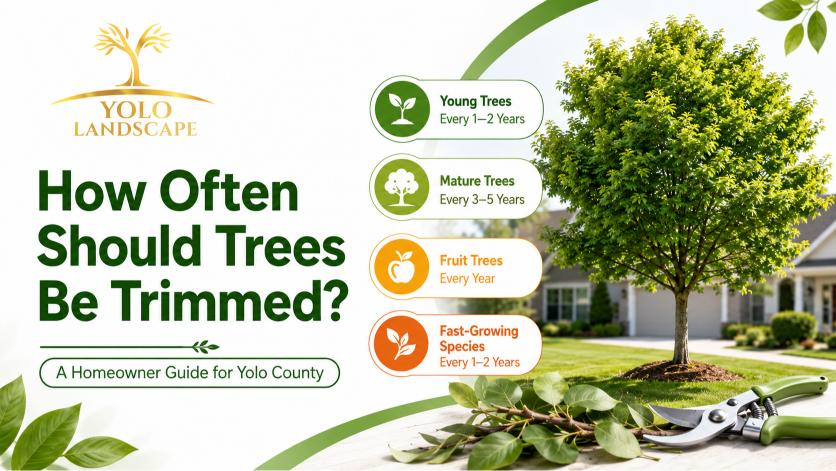
Young Trees (Under 5 Years)
Every one to two years for structural shaping. This is when you establish the branch framework that determines long-term safety. Skipping early pruning is one of the most expensive mistakes Yolo County homeowners make. This is because correcting poor structure in a mature tree costs significantly more.
Mature Trees (Over 15 Years)
Every three to five years for maintenance pruning, with annual inspections. Mature tree maintenance is about safety management more than shaping at this stage.
Fruit Trees
Every single year without exception. Annual pruning is not optional for production trees. A neglected fruit tree loses productive wood, becomes overcrowded, and starts producing smaller, lower-quality fruit within two seasons.
Fast-Growing Species
Cottonwood and other fast-growing species in Yolo County may need attention every year or two to manage their rapid growth and prevent overcrowding near structures.
Should You Trim Trees Yourself or Hire an Arborist?
Safe DIY Projects
Light maintenance pruning on trees under 15 feet, removing clearly dead branches within reach from the ground, and shaping small ornamental trees are all reasonable DIY tasks if you have proper tools and know what you are removing.
Dangerous Situations That Need Professionals
Any work that requires a ladder above 10 feet, any branch larger than four inches in diameter, anything near utility lines, anything over a structure, and any work on trees showing signs of disease or root instability should go to a professional tree pruning service. The risk of serious injury from DIY work in these situations is not theoretical.
Cost Comparison
| Work Type | DIY Cost | Professional Cost | Risk Level |
|---|---|---|---|
| Light pruning, small trees | $20–$80 (tools) | $150–$400 | Low |
| Mature tree trimming | Not recommended | $400–$900 | High |
| Oak disease-safe pruning | Not recommended | $350–$800 | Very High |
| Emergency storm damage | Never DIY | $500–$1,500 | Extreme |
| Annual fruit tree pruning | Possible with training | $200–$450 | Moderate |
Our “tree trimming services in Yolo County” cover everything from routine maintenance to complex mature tree work, with crews experienced specifically in the species and disease pressures of this region.
What Are the Signs Your Tree Needs Immediate Attention?
Do not wait for scheduled maintenance if you see any of these:
-
- Dead limbs that are dry, brittle, and have no leaves during growing season. Dead wood can fall without warning.
-
- Visible cracks in a branch or trunk junction, especially after wind events. Cracks under load can fail completely with very little additional stress.
-
- Fungal growth at the base of a trunk or on major limbs. This often signals internal decay that is not visible from the outside.
-
- Leaning that has changed since you last looked. A tree that has shifted its lean is telling you something is happening with its root system.
-
- Branches touching your roof or utility lines, which create both structural and fire risk year-round.
If you see any of these on your property in Woodland, Davis, Winters, or West Sacramento, do not wait for the right season. Call for an inspection now. Our “emergency tree trimming and hazard assessment” service operates year-round for exactly these situations.
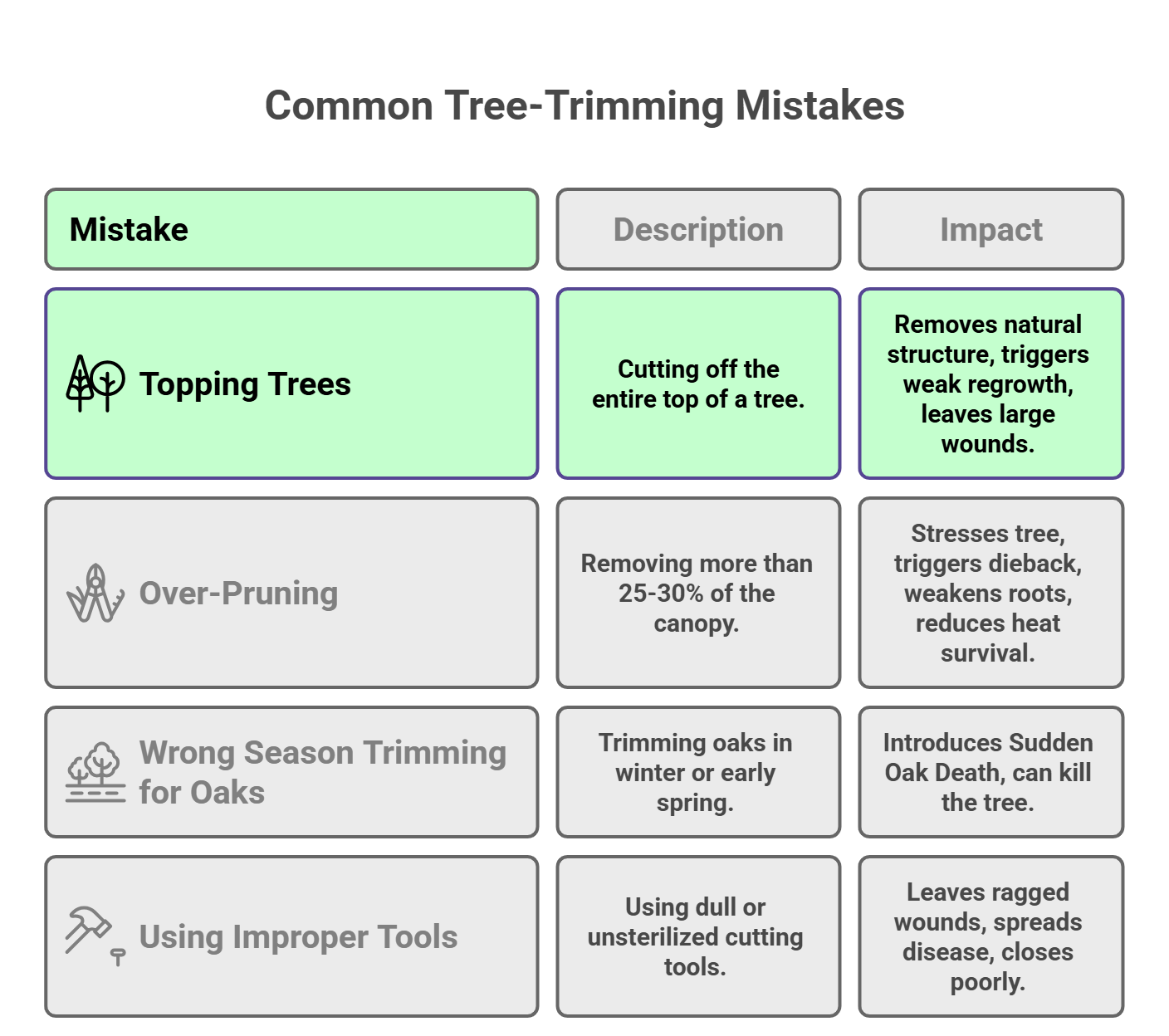
What Are the Biggest Tree-Trimming Mistakes Homeowners Make?
Topping Trees
Topping, which means cutting the entire top off a tree to reduce its height, is one of the most damaging things you can do. It removes the natural structure that supports the tree’s weight, triggers rapid, weakly attached regrowth, and leaves massive wounds that rarely close properly. A topped tree is actually more dangerous than an untrimmed one.
Over-Pruning
Removing more than 25% to 30% of a tree’s canopy in a single season puts serious stress on the tree. We have seen homeowners request heavy cuts thinking they are being thorough, when they are actually triggering dieback, weakening the root system, and reducing the tree’s ability to survive the following summer heat.
Wrong Season Trimming for Oaks
As covered above, this is the most consequential mistake in Yolo County specifically. Trimming oaks in winter or early spring is not just suboptimal. It can introduce Sudden Oak Death into a healthy tree and result in losing a tree that took decades to grow.
Using Improper Tools
Dull or unsterilized cutting tools leave ragged wounds that close poorly and spread disease between trees. Sterilizing blades with a 10% bleach solution between cuts is standard practice among ISA arborists and is almost never done by homeowners doing their own pruning.
Expert Arborist Recommendations for Long-Term Tree Health
The certified arborists we work with in Yolo County consistently give the same core advice to homeowners who want to maintain healthy trees for the long term.
First, establish an annual inspection habit. Walk your property in October before storms and in February before spring growth. These two inspections catch most problems at a stage where they are still manageable.
Second, track your tree trimming history. Document what was done and when. This protects you with insurance companies if a weather event causes damage and helps future arborists understand what your trees have already been through.
Third, invest in young trees. The cost of proper “structural pruning for young trees” in the first five years is a fraction of the cost of correcting structural problems in a mature tree later. Our “residential tree care and maintenance” team works with homeowners across Yolo County specifically on this kind of long-term planning.
Fourth, do not try to save money by skipping professional assessment on trees that concern you. A $150 inspection that finds a $300 problem is a far better outcome than discovering a $5,000 problem after it has already caused damage.
Conclusion
The best time to trim trees in Yolo County is not one single month on the calendar. It is a seasonal system that changes depending on what you are growing, where it sits on your property, and what you are trying to achieve.
For most trees, late winter from January through March is your primary window. For oak trees, flip that and focus on the dry summer months of July through October. For fruit trees, February is almost always the right answer. And for dead wood or genuine hazards, the right time is always now, regardless of the calendar.
The homeowner in Woodland who lost part of his garage roof to that neglected elm branch now has a set inspection schedule. He checks every October and trims every February. He has not had a problem since.
Do not wait until a storm makes the decision for you. Take a walk around your property this week and look honestly at what your trees are telling you. If something concerns you, our “professional tree trimming and seasonal maintenance” team at Yolo Landscape serves Woodland, Davis, Winters, West Sacramento, and surrounding Yolo County communities year-round.