
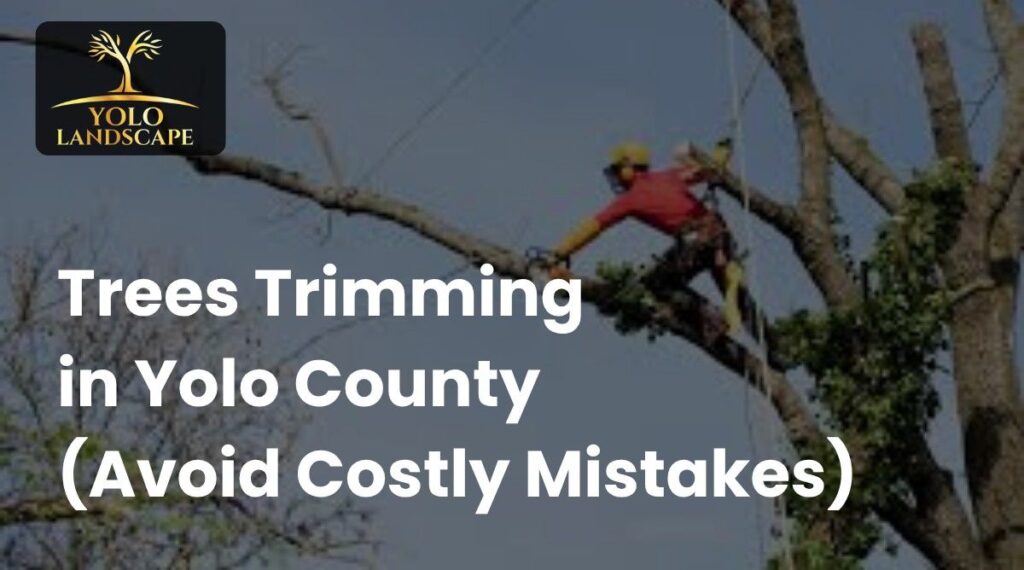
The Branch That Cost a Homeowner $6,000
It was late October. A Yolo County homeowner had been putting off tree trimming for two seasons. “It looks fine,” he told himself. Then the first big storm of the season rolled through Northern California, and a heavy oak branch came down across his fence, clipped the corner of his garage roof, and crushed a section of his irrigation system.
Total damage: just over $6,000. His insurance covered some of it. His regret covered the rest.
I am not telling you this to scare you. I am telling you because this scenario plays out every single year in Yolo County, and almost every time, it was entirely preventable.
When to trim trees is not just a seasonal question. It is a safety question, a legal question, and, honestly, a money question. Get the timing right, and your trees stay healthy, your property stays protected, and you avoid the kind of emergency call that ruins a weekend.
This guide covers everything you need to know, from the best trimming windows to permit rules, cost expectations, and warning signs that a tree is telling you it needs attention right now.
What you will learn in this guide:
- The safest seasonal windows for tree trimming
- How California’s climate changes the standard trimming rules
- When summer trimming helps versus when it harms
- What tree removal costs in Yolo County actually look like
- How to spot a dangerous tree before it spots your roof
When Is the Best Time to Trim Trees in Yolo County?
The short answer is late winter, roughly between January and early March. For most species in Northern California, this window hits just before new spring growth begins, which means you are removing old wood without interrupting the tree’s growth cycle.
But here is one thing that is worth keeping in mind. Yolo County sits in a climate zone that behaves differently from the rest of California. The Central Valley heat, combined with dry summers and mild winters create a trimming rhythm that does not always match the national advice you find in standard gardening articles.
Why Late Winter Is the Safest Window
During late winter, most trees are in or near dormancy. The sap flow is low, wounds close faster, and the risk of pest infestation through fresh cuts is significantly reduced. In California tree care, this window also happens to fall before the oak moth and bark beetle activity peaks, which matters a great deal if you have heritage oaks on your property.
For fruit trees in California, late winter pruning is practically non-negotiable. Pruning a peach, apple, or plum tree between January and February encourages stronger fruiting wood and directly affects your yield for the coming season. I have seen homeowners shift from a poor harvest to an excellent one simply by moving their pruning from fall to late winter.
How California Climate Changes the Timing
Northern California’s mild winters mean trees do not always go fully dormant the way they do in colder states. This is actually an advantage. You have a wider late-winter window than a homeowner in Minnesota would. However, it also means you need to pay closer attention to the individual tree rather than following a fixed calendar date.
Watch for these signals that your tree is ready for trimming:
- Leaves have fully dropped on deciduous species
- No visible new bud swelling yet
- Nighttime temperatures are still consistently below 50 degrees Fahrenheit
Yolo Landscape technicians assess each tree individually before recommending a trimming date. That approach has prevented dozens of stress-related issues for our clients across Woodland, CA, and the surrounding areas.
How Often Should Trees Be Trimmed in Residential Areas?
This depends on the species and age of the tree, but here is a practical framework most arborist professionals use.
Tree Type | Recommended Trimming Frequency |
Young trees (under 5 years) | Every 1 to 2 years for the structure |
Mature shade trees | Every 3 to 5 years |
Fruit trees | Annually in late winter |
Fast-growing species | Every 2 to 3 years |
Oak trees | Every 3 to 5 years, avoiding summer |
Fast-growing trees like silver maple and cottonwood need more frequent attention because their wood tends to be weaker and more prone to storm breakage. Slow-growing trees like oaks and most conifers can go longer between trimmings without issue.
One thing I always tell homeowners: do not wait until the tree looks bad to schedule a trim. By the time overgrowth is visually obvious, the tree canopy has already developed structural imbalances that take multiple seasons to correct properly.
What Happens If You Don't Trim Trees Before Storm Season?
Storm tree preparation is one of the most undervalued services in residential landscaping, especially in Yolo County, where late fall and winter storms can arrive with very little warning.
Untrimmed trees carry more weight and wind resistance in their canopy. During high winds, that extra mass becomes leverage against the root system and the branch union points. The branches most likely to fail are the ones that were already weak, crossing, or rubbing against other branches, exactly the branches that a proper trimming would have removed.
Real Risks Homeowners Ignore
Falling branches are the obvious risk. Less obvious is what those branches can hit. Utility lines, roof sections, parked vehicles, and neighbors’ property are all in play. Beyond immediate physical damage, there is the matter of liability. If an untrimmed tree on your property damages a neighbor’s fence or vehicle, you may be responsible for those costs.
Property damage examples from Yolo County storms in recent years include crushed fencing from unpruned elm branches, a cracked driveway from root upheaval on a neglected tree, and a garage roof puncture from a dead limb that had visible decay for over a year.
Insurance claim scenarios are complicated by maintenance records. Some homeowners’ insurance policies include clauses that reduce payouts if the insurer determines the damage resulted from neglected maintenance. Documenting your trimming schedule is not just good practice. It is financial protection.
Can You Trim Trees in Summer in California?
Summer trimming is not always wrong. What causes problems is removing too much live wood during peak heat, not the act of trimming itself.
Light corrective trimming in summer, meaning removing dead wood, crossing branches, or obvious hazards, is generally fine for most California species. What you want to avoid in summer is heavy structural pruning that removes more than 15 to 20 percent of the canopy at once.
When Summer Trimming Is Okay
- Removing dead or broken branches after storm damage
- Light shaping of ornamental trees
- Clearing branches from utility lines or structures
- Trimming palm trees, which actually prefer summer trimming
When It Harms Tree Health
Heavy summer pruning during a Yolo County heat wave creates large fresh wounds at the exact moment when the tree is already under thermal stress. The combination invites fungal infection, increases water demand, and can cause sunscald on previously shaded bark sections.
Oak trees deserve special mention here. Oak tree trimming rules in California strongly recommend against trimming oaks from April through October because this is the peak activity window for the beetle that spreads sudden oak death. Late winter is the only truly safe window for oak work.
Do You Need a Permit to Remove a Tree in California?
This is one of the most frequently asked questions, and the answer depends on exactly where you are and what species of tree you are dealing with.
California tree laws give individual municipalities significant authority over tree removal on private property. In Yolo County, the rules vary by city. Woodland, CA, has its own tree ordinance that applies to trees above a certain trunk diameter, typically 10 inches measured at breast height.
Yolo County Rules Explained Simply
For most routine trimming, no permit is required. Where it gets more complicated:
- Removing a tree with a trunk diameter over 10 inches may require a city permit
- Oak trees are specifically protected under many local ordinances
- Trees within a certain distance of public sidewalks or utility easements have additional rules
- Tree removal of any protected species requires documentation and sometimes a replacement planting commitment
Step-by-Step Permit Process
- Measure the trunk diameter at 4.5 feet above ground
- Identify the species, because protected species have different rules
- Contact the Woodland CA Public Works or Planning Department
- Submit a removal application with a reason and site photos
- Wait for approval before beginning any work
Yolo Landscape handles the permit process for clients as part of our full-service removal projects. We know the local rules, which means you avoid the fines that come from skipping this step.
How Much Does Tree Trimming Cost in Yolo County?
Tree removal costs in California and trimming prices both vary based on tree size, access, species, and the amount of debris removal required.
Service | Average Cost Range |
Small tree trimming (under 25 ft) | $150 to $400 |
Medium tree trimming (25 to 50 ft) | $400 to $800 |
Large tree trimming (over 50 ft) | $800 to $1,500 |
Tree removal (small) | $300 to $700 |
Tree removal (large or complex) | $1,000 to $3,000+ |
Emergency removal after the storm | $500 to $2,500+ |
Stump grinding | $100 to $400 |
What affects pricing includes access difficulty (trees near structures cost more), debris volume, whether permits are required, and whether the tree has structural hazards that require specialized rigging.
DIY tree trimming is possible for small trees under 15 feet with basic pruning tools. For anything taller or closer to structures, the cost of a professional is almost always justified by the reduction in personal injury risk and property damage liability.
How Do You Know If a Tree Is Dangerous?
Learning to spot dangerous tree symptoms is one of the most practical skills a homeowner can develop. You do not need to be an arborist to notice the warning signs.
Warning Signs You Should Not Ignore
- Dead branches in the upper canopy, especially large ones
- Visible cracks or splits in the main trunk or major limbs
- Tree-leaning risk: a tree that has shifted its lean angle recently
- Fungal growth, mushrooms, or visible decay at the base
- Tree bark damage: large sections of missing or loose bark
- Roots that are cracked, heaved, or separated from the soil
- Branches overhanging your roof, power lines, or your neighbor’s property
Quick Inspection Checklist
Run through this after every significant windstorm:
- Walk the full perimeter of the tree
- Look up through the canopy for hanging or cracked branches
- Check the base for mushroom growth or soil heaving
- Look for any new lean that was not there before
- Check where major branches attach to the trunk for cracks or decay
If you spot more than one warning sign on the same tree, call a professional before the next storm season arrives.
How Do You Know If a Tree Is Dangerous?
This is a question that sounds simple but actually matters quite a bit for tree health.
Pruning focuses on the tree’s long-term health and structure. It involves removing dead, diseased, or structurally problematic wood. Pruning is what an arborist does when they are thinking about where that tree will be in 10 years.
Trimming typically refers to aesthetic shaping, controlling size, or removing growth that is interfering with structures or sight lines. Most homeowners think they need trimming when they often actually need pruning.
The practical difference: if a branch is healthy but in the wrong place, you trim it. If a branch is diseased, dead, crossing another major limb, or creating a structural weakness, you prune it.
Getting this wrong in the wrong direction is one of the tree-trimming mistakes that causes long-term damage. Over-trimming a healthy tree by removing too much live wood stresses the root system and can set back growth by a full season.
Which Trees Need Special Care in Northern California?
Oak Trees: Legal and Seasonal Limits
Oak trees in California are protected at multiple levels of government. Beyond the permit requirements mentioned earlier, oaks have specific biological vulnerabilities that make trimming season critically important. Trimming outside the safe late-winter window directly increases disease exposure.
Yolo Landscape recommends treating every oak on your property as a protected asset, regardless of whether it technically triggers a permit requirement. The value of a mature oak in Yolo County, both financially and ecologically, is not replaceable on any reasonable timeline.
Fruit Trees: Timing Matters Most
Trimming fruit trees correctly is one of the highest-return activities a homeowner can invest in. Annual late-winter pruning of deciduous fruit trees encourages new fruiting wood, controls tree height, and opens the canopy to sunlight and air circulation. Skip this one year, and you typically see reduced fruit size and increased pest pressure the following season.
Evergreen vs Deciduous Care
Evergreen trees, because they do not lose their leaves, do not follow the same dormancy-based trimming calendar. Light trimming is generally acceptable in spring and early summer. Heavy structural work should still be reserved for cooler months to reduce stress.
Should You Hire a Professional or Do It Yourself?
Situation | DIY reasonable? |
Small tree under 15 feet, no obstacles | Yes, with proper tools |
Tree near the roof, fence, or power line | No, a professional is needed |
Oak tree or protected species | No, legal risk involved |
Dead tree over 20 feet | No, structural unpredictability |
Fruit tree shaping | Yes, with guidance |
Emergency storm damage | No, call immediately |
When DIY becomes dangerous is usually the moment a ladder is involved at height, combined with a chainsaw. The combination of elevation, unstable footing, and power tools accounts for a disproportionate share of serious home improvement injuries each year.
Hiring checklist for a professional service:
- Confirm they carry liability and workers’ compensation insurance
- Ask for references from Yolo County or Woodland CA jobs specifically
- Request a written quote that breaks out trimming, removal, and debris cleanup separately
- Ask if they handle permits when required
Yolo Landscape brings certified, insured professionals to every tree job in Yolo County with transparent pricing and no surprise fees after the work is done.
The Biggest Tree Trimming Mistakes Homeowners Make
Over-trimming is genuinely more common than under-trimming, and it causes more lasting damage. Removing more than 25 percent of a tree’s live canopy in a single season triggers stress responses that can weaken the entire tree for years.
Wrong timing is the second biggest mistake. Trimming oaks in summer, pruning fruit trees in fall, or doing heavy structural work right before a heat wave are all decisions that look reasonable in the moment and create problems over the following season.
Ignoring safety risks is the third. Homeowners who see a leaning branch and decide to handle it themselves with a ladder and a handsaw are creating new hazards in the process of trying to remove it.
Seasonal Tree Care Plan for Yolo County Homeowners
Month | Recommended Action |
January to February | Primary pruning window for most trees. Best for oaks and fruit trees. |
March to April | Light trimming only. Avoid heavy cuts as growth begins. |
May to June | Monitor for pests and disease. Address dead wood only. |
July to August | Avoid structural pruning. Palms acceptable. Emergency work only. |
September to October | Storm tree preparation. Inspect for hazards before rain season. |
November to December | Final pre-dormancy inspection. Schedule late-winter work early. |
Your Trees Are Not Going to Wait
The homeowner, from the beginning of this guide, spent $6,000 on a problem that a $400 trimming appointment would have prevented. That math is not complicated.
When to trim trees in Yolo County comes down to a simple priority: late winter for most species, annual pruning for fruit trees, pre-storm inspection every single fall, and professional help any time the tree is over 20 feet or near a structure.
Yolo Landscape serves homeowners and commercial properties across Yolo County and Woodland, CA, with seasonal tree trimming, structural pruning, permit-managed removal, and emergency storm response. Our team knows the local climate, the local tree species, and the local rules, which means you get advice that actually fits your specific situation.
Ready to get your trees assessed before the next storm season? Contact Yolo Landscape for a transparent, no-pressure inspection and quote. We will tell you exactly what your trees need and what they do not.
What tree on your property have you been putting off dealing with, and what is stopping you from finally getting it done?
Frequently Asked Questions
When is the best time to trim trees in Yolo County?
Late winter, between January and early March, is the safest window for most species. Trees are near dormancy, wounds heal faster, and pest activity is low. This timing works especially well for oaks and fruit trees in our Northern California climate.
How often should I trim my trees?
Most mature trees need trimming every three to five years. Fruit trees benefit from annual late-winter pruning. Fast-growing species may need attention every two years to prevent structural problems before they become hazardous.
Is it bad to trim trees in summer?
Heavy pruning in summer stresses trees and invites disease, especially in the Yolo County heat. Light dead wood removal is usually fine. Oak trees should never be trimmed between April and October due to the risk of sudden oak death.
Do I need permission to remove a tree?
In Woodland, CA, and Yolo County, trees over roughly 10 inches in trunk diameter may require a city permit before removal. Oak trees and other protected species have stricter rules. Always check with your local planning department before starting work.
How much does tree trimming cost?
In Yolo County, small tree trimming typically runs $150 to $400. Medium trees range from $400 to $800. Large trees or complex removals can reach $1,500 or more. Emergency storm removal costs more due to urgency and hazardous conditions.
What happens if I don't trim my trees?
Untrimmed trees develop weak branch unions, excess canopy weight, and dead wood that becomes a serious storm hazard. Property damage, insurance complications, and costly emergency removals are the most common consequences homeowners face.
Can trimming kill a tree?
Yes, if done incorrectly. Removing more than 25 percent of the live canopy in a single session, cutting at the wrong time of year, or making improper cuts at branch unions can cause long-term decline and, in some cases, kill the tree entirely.
What tools do I need for tree trimming?
Hand pruners handle branches up to one inch. Loppers work for branches up to two inches. A pole saw handles higher branches without a ladder. For anything larger or at significant height, professional equipment and training are genuinely necessary.
Should I hire a professional arborist?
For trees near structures, over 20 feet tall, or showing signs of disease or decay, yes. The cost of professional service is almost always lower than the cost of repairing damage from a DIY job that goes wrong at height.
How do I know if a tree is dangerous?
Look for dead upper branches, visible trunk cracks, mushroom growth at the base, loose bark, and any recent change in lean angle. If you spot two or more of these on the same tree, schedule a professional inspection before storm season.
What trees should not be trimmed in summer?
Oak trees are the most critical. Trimming oaks between April and October significantly raises the risk of sudden oak death. Most deciduous shade trees also do better with structural work delayed until late winter dormancy.
How do storms affect tree safety?
Storms expose structural weaknesses that were already present. Heavy, untrimmed canopies act as wind sails, increasing the load on branch unions and roots. Pre-storm trimming is one of the most cost-effective investments a Yolo County homeowner can make.
Can I trim trees myself legally?
Routine trimming of trees on your own property is legal without a permit in most cases. Tree removal over a certain size, and all work on protected species like oaks, may require permits. Check Woodland, CA, city rules before removing anything significant.
What is the difference between pruning and trimming?
Pruning targets tree health by removing dead, diseased, or structurally weak wood. Trimming shapes the tree for appearance or to control growth. Both matter, but pruning has the bigger long-term impact on how healthy and structurally sound your trees become.
How long does tree trimming take?
A single small to medium tree typically takes two to four hours for a professional crew. Large trees or those requiring rigging near structures can take a full day. Debris cleanup and haul-away are usually included in professional quotes from Yolo Landscape.