
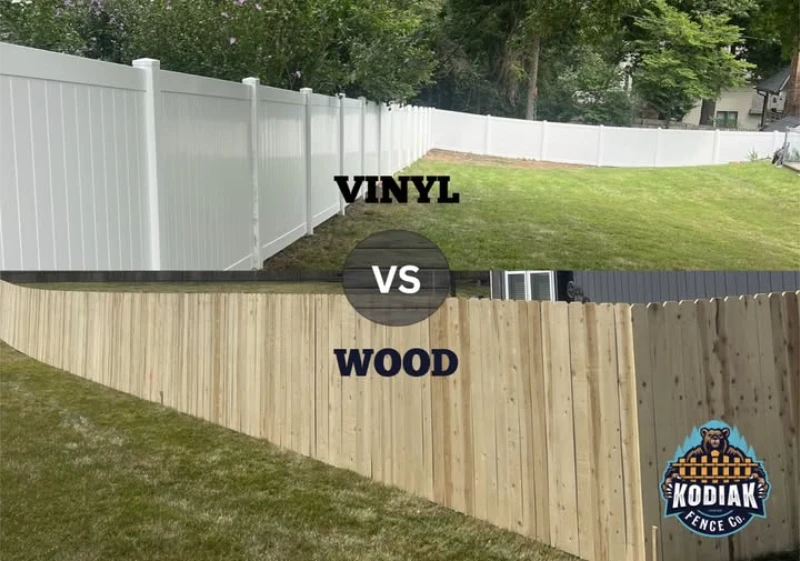
Three months ago, a homeowner in Woodland, California, called us completely frustrated. She had spent $4,200 on a wood fence installation two summers prior. Now the boards were warping, the posts were rotting at the base, and her backyard looked worse than before.
Was it the California heat? Poor wood fence maintenance? The wrong material choice entirely?
The truth is, most homeowners in Yolo County and across California ask the wood vs vinyl fence question when it is already too late. They pick based on upfront cost or how something looks in a photo. Then reality hits. The sun bakes the material. The dry season cracks what was not sealed. The kids and the dog are living in a backyard that no longer feels safe or private.
Here is something worth knowing before we go further. In 2026, California homeowners are replacing fences faster than ever. Rising material costs, stricter HOA standards, and years of deferred maintenance are pushing thousands of backyard renovation decisions right now. Choosing wrong this time is more expensive than ever.
So let me give you the straight answer most fence guides avoid. Both materials can work well in California. But the one that works best for your home depends on your budget, timeline, willingness to do maintenance, and exactly where in California you live.
This guide covers everything you need to make that call confidently. Costs, lifespan, climate performance, case studies from real Yolo County properties, and an honest comparison of both materials. No fluff. Just what actually matters.
What Should California Homeowners Know Before Choosing Between Wood and Vinyl Fencing?
California is not like other states when it comes to fencing. The combination of intense UV exposure, hot dry summers, and occasional moisture swings creates a climate that tests every fencing material harder than most regions in the country.
Why California Weather Changes Fence Performance
Wood naturally absorbs and releases moisture. In California’s Sacramento Valley, where summer temperatures regularly hit 100°F and humidity drops low, untreated wood dries out fast. Boards shrink, crack, and eventually split. Cedar fencing and redwood fencing handle this better than pine because of their natural oils. But even premium wood needs sealing every two to three years to survive the California summer without warping.
Vinyl fencing, made from PVC, does not absorb moisture. It expands and contracts with temperature but does not rot or splinter. That is a significant advantage here.
How Sunlight and Heat Affect Fence Materials
UV exposure is the silent killer of California fences. Direct sunlight bleaches and weakens wood fibers over time. Without UV protective sealants, a wood fence can look weathered within three to four years of installation.
Cheap vinyl also fades. But quality UV-resistant fencing made from thick PVC holds its color for 20 to 25 years. The difference is material grade, which is why hiring experienced “fence installation” professionals like Yolo Landscape matters enormously.
Coastal vs. Inland Climate Considerations
Coastal California homeowners near the Bay Area deal with salt air and fog. That moisture accelerates wood rot. Inland properties in Yolo County, Woodland, Davis, and West Sacramento face the opposite problem: extreme dry heat with little humidity. Both climates stress fencing differently. Knowing your microclimate helps you choose the right material from the start.
What Are the Biggest Differences Between Wood and Vinyl Fences?
This is the core question, and people get the answer too simply. Let me give you the full picture.
Appearance and Design Flexibility
Wood fencing wins on natural beauty. Cedar has that warm, rich grain. Redwood has a distinctive reddish tone that photographs beautifully. You can stain it any color, repaint it, and reshape it. If your home has a rustic or traditional look, wood fits better visually.
Vinyl fencing looks clean and modern. The panels are uniform, the color is consistent, and it never needs painting. If you want a crisp, polished backyard without thinking about it again for 20 years, vinyl delivers that.
Here is something competitors do not tell you. Custom wood fence designs can exceed vinyl in visual impact when installed and maintained properly. The problem is that most homeowners do not maintain them properly.
Durability Comparison
| Feature | Wood Fence | Vinyl Fence |
| Rot resistance | Moderate (cedar/redwood better) | Excellent |
| Termite resistance | Low to moderate | Excellent |
| UV resistance | Low without sealant | High |
| Wind flexibility | Rigid, can crack under pressure | Flexible, bends before breaking |
| Color retention | Requires repainting | 20+ years without fading |
Average Lifespan of Cedar Fencing
Cedar fencing in California, with proper annual inspection and sealing every two to three years, typically lasts 15 to 20 years. Without maintenance, you are looking at 8 to 12 years before significant deterioration begins.
Average Lifespan of Vinyl Fencing
Vinyl fencing from a reputable manufacturer lasts 25 to 30 years with almost zero maintenance. A simple rinse with a garden hose once a year keeps it looking new.
Is Wood Fencing More Affordable Than Vinyl in California?
This is where people get tripped up. Wood looks cheaper at first. And it is, initially.
Upfront Installation Costs
In California, as of 2026, based on current market data from HomeAdvisor and Angi:
- Wood fence installation cost: $18 to $38 per linear foot installed (cedar or redwood)
- Vinyl fence installation cost in California: $28 to $48 per linear foot installed
For a standard 150-linear-foot backyard fence, that means:
- Wood: approximately $2,700 to $5,700
- Vinyl: approximately $4,200 to $7,200
Wood saves you roughly $1,500 upfront. That sounds great until you calculate the next 15 years.
Long-Term Maintenance Expenses
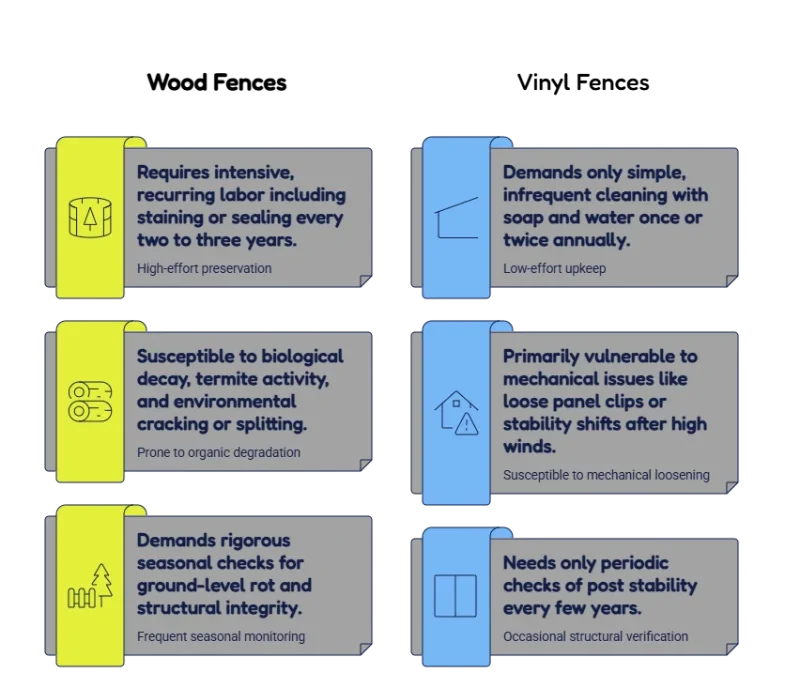
Wood requires staining or sealing every two to three years. In California in 2026, professional fence staining costs run $1.50 to $3.50 per linear foot. On a 150-foot fence, that is $225 to $525 per treatment. Over 15 years, you will pay for five to seven treatments. Add in board replacements, post repairs, and termite treatments, and your wood fence may cost you $2,500 to $4,000 more over its life than vinyl.
Vinyl requires almost none of that. A pressure washer rental once a year handles most cleaning needs.
Repair and Replacement Costs
Fence Staining Costs
Professional staining in Yolo County in 2026 runs approximately $2 to $3 per linear foot. Budget for this every two to three years if you choose wood.
Vinyl Cleaning Costs
A pressure washer rental costs $60 to $110 per day in 2026. Most homeowners need about two hours to clean a standard backyard fence. That is your annual maintenance cost for vinyl.
Which Fence Requires Less Maintenance Over Time?
There is no debate here. Vinyl wins.
But the honest answer is that “low maintenance” does not mean “zero maintenance.” It just means vinyl maintenance is simple and inexpensive.
Seasonal Maintenance Checklist for Wood Fences
- Inspect posts at ground level every spring for rot
- Check boards for cracking or splitting after summer heat
- Apply wood sealant or stain every two to three years
- Check for termite activity, especially in warm months
- Replace damaged boards immediately to prevent the spread
Cleaning and Caring for Vinyl Fences
- Rinse with a garden hose or pressure washer once or twice a year
- Use mild soap and water for stubborn dirt or mold spots
- Inspect panel connections after strong windstorms
- Check post stability every two to three years
Common Maintenance Mistakes Homeowners Make
The biggest mistake I see in California privacy fences? Skipping the annual inspection. Homeowners think their fence is fine because it looks okay from the house. But ground contact rot in wood posts or loose vinyl panel clips can go unnoticed for years until the fence leans or collapses. A 20-minute walkthrough every spring saves thousands in 2026 repair costs.
Our “fence installation” team at Yolo Landscape always walks clients through a post-installation care plan so this does not happen.
Which Fence Lasts Longer in California Weather Conditions?
Based on everything we see working across Yolo County and the Sacramento region in 2026, vinyl outlasts wood in California’s specific climate.
Heat Resistance Comparison
California summers are brutal. Temperatures regularly exceed 100°F in the Sacramento Valley from June through September. Wood fencing in this heat without regular treatment dries, shrinks, and splits. Vinyl fencing expands slightly in heat but returns to its original shape as temperatures drop. Over decades, this cycle causes far less structural damage than it does to wood.
Moisture and Rain Resistance
California’s rainy season runs roughly from November through March. That sudden moisture after months of dry heat is brutal on wood. Wet wood swells. As it dries, it contracts. That repetitive cycle causes warping and cracking. Vinyl does not absorb water, so it is completely unaffected.
Wind and Storm Durability
Northern California experiences occasional windstorms, especially in fall. Vinyl fencing flexes under wind pressure rather than resisting it rigidly. That flexibility actually prevents cracking and panel loss. Wood fences, when rigid and dry, can crack or have panels blown free if boards are not properly fastened.
Best Fence Materials for Hot California Summers
For California homeowners specifically, UV-resistant vinyl fencing or properly treated cedar fencing are your two best options for hot-weather performance. If you want natural wood beauty, cedar with annual sealing is your safest bet. If you want to stop thinking about it, vinyl is the smart long-term choice.
Which Fence Offers Better Privacy and Security for Families?
Both wood and vinyl can deliver excellent backyard privacy. The difference is in the design options and long-term structural integrity.
Best Fence Heights for Backyard Privacy
In most California residential areas, 6-foot privacy fences are standard and HOA-approved in most neighborhoods. Both wood and vinyl are available at this height. For maximum privacy, solid panel designs with no gaps work best. Cedar privacy fence panels have a slight edge in visual warmth. Vinyl solid panels maintain their appearance longer without staining or weathering.
Pet-Friendly Fence Designs
Dogs are hard on fences. They dig at the base, press against panels, and chew on wood. Vinyl is significantly more resistant to chewing and does not splinter when damaged. For pet safety, vinyl wins. If you choose wood, ensure boards extend close to ground level to limit digging access.
Child Safe Fencing Considerations
Both materials are safe for children when installed correctly. Vinyl has no splinter risk, which is a real advantage in households with young kids. Wood, if maintained properly, is also safe. The key is professional installation with no sharp edges or protruding fasteners. Our “residential landscape installation” team in Yolo County handles both types with family safety built into every project.
Which Fence Style Improves Curb Appeal More?
Curb appeal is subjective. But from what we see in the housing market across Woodland, Davis, and West Sacramento in 2026, both materials add value when installed professionally.
Rustic Wood Fence Styles
A well-maintained cedar fencing or board-on-board wood fence brings warmth to traditional California homes. It photographs beautifully for real estate listings. Buyers often respond emotionally to natural wood. In established neighborhoods with mature trees and landscaping, wood feels like it belongs.
Modern Vinyl Fence Trends
Newer California subdivisions and modern homes lean toward clean-line vinyl fencing in white, tan, or gray. HOAs in many Yolo County communities specifically allow or prefer vinyl because it looks consistent and requires no repainting over time. In 2026, gray-toned vinyl is one of the fastest-growing fence color choices in California.
Matching Fence Designs With Landscaping
A fence that fights with your landscaping design is worse than no fence at all. If your yard has a natural garden feel, wood complements it. If you have a clean hardscape, a modern patio, or minimal planting, vinyl fits better. Our “backyard transformation services” team always considers the full landscape picture before recommending a fencing material.
Fence Colors That Increase Home Value
According to the National Association of Realtors, well-maintained fencing adds curb appeal and perceived security. White vinyl consistently performs well in buyer surveys. Natural cedar with a clear sealant finish also ranks highly. Avoid bold fence colors that clash with your home’s exterior paint.
Can Wood and Vinyl Fencing Increase Property Value?
Yes, both can. But the keyword is “can.” A poorly maintained fence actively hurts your home’s value.
Buyer Preferences in California Neighborhoods
California buyers in 2026 prioritize low-maintenance outdoor features more than ever. Rising labor and material costs mean buyers factor in future maintenance before making offers. A vinyl fence signals low ongoing cost. A beautifully maintained cedar fence signals craftsmanship and care. Both make strong impressions when done right.
ROI Comparison Between Fence Materials
Industry data from Angi and HomeAdvisor suggests residential fencing solutions return 50% to 75% of installation cost in resale value. The difference with vinyl is that the value holds over 20-plus years without additional investment. Wood may return similar value initially but requires ongoing investment to maintain that value.
Appraisal Considerations
Appraisers do not assign a specific dollar value to fence material type. What they do factor in is condition. A deteriorating wood fence can reduce appraised value. A clean, structurally sound fence of either material adds to the overall property value and presentation.
What Are the Most Common Problems With Wood and Vinyl Fences?
Let me be honest here. Both materials have problems. Knowing them up front prevents nasty surprises.
Troubleshooting Wood Fence Issues
Rot and Moisture Damage
The single most common wood fence problem in California. Ground contact is where rot starts. Use concrete post setting and pressure-treated posts, and keep soil away from wood boards. If you catch rot early, board replacement is cheap. If you ignore it, the post fails, and the whole fence section goes with it.
Warping and Splitting
This happens when wood is exposed to repeated heat cycles without sealant protection. Once a board warps significantly, it cannot be reversed. Replace it immediately and seal the surrounding boards.
Termite Problems
Termites cost California homeowners billions of dollars annually. Cedar fencing and redwood fencing are more resistant but not immune. Annual inspections and treatment matter, especially in Yolo County’s warmer months.
Troubleshooting Vinyl Fence Issues
Cracking in Extreme Temperatures
Cheap vinyl becomes brittle in very cold temperatures. In Northern California’s occasional winter freezes, budget-grade PVC fencing can crack on impact. Invest in quality vinyl with thicker walls.
Mold and Dirt Buildup
Vinyl fence cleaning is simple but necessary. Mold can develop in shaded or damp fence areas. A mixture of dish soap and water with a soft brush handles it easily. Do not ignore mold growth for more than a season.
Color Fading
Low-quality vinyl fades within five to ten years under California’s UV exposure. Quality vinyl from reputable manufacturers holds color for 20 years or more. Ask your contractor about material grade before purchasing.
What Are Real California Homeowners Choosing in 2026?
Here is what we actually see in the field, not what the marketing says.
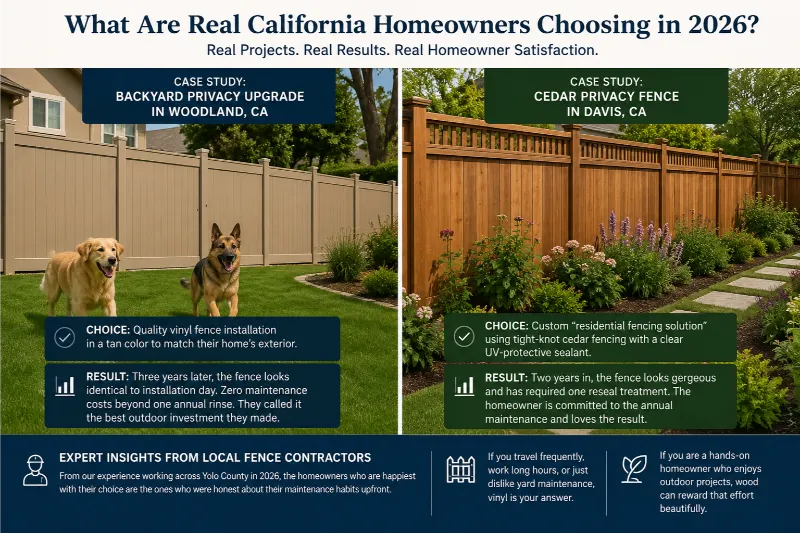
Case Study: Backyard Privacy Upgrade in Woodland, CA
A family in Woodland wanted full backyard privacy and a fence that could handle their two large dogs. They initially wanted cedar for the natural look. After reviewing maintenance costs and dog-related damage risks, they chose quality vinyl fence installation in a tan color to match their home’s exterior.
Result: Three years later, the fence looks identical to installation day. Zero maintenance costs beyond one annual rinse. They called it the best outdoor investment they made.
Case Study: Cedar Privacy Fence in Davis, CA
A Davis homeowner with a mature garden and traditional landscaping specifically wanted the natural wood look. We installed a custom “residential fencing solution” using tight-knot cedar fencing with a clear UV-protective sealant.
Result: Two years in, the fence looks gorgeous and has required one reseal treatment. The homeowner is committed to the annual maintenance and loves the result. This works when the homeowner is genuinely willing to invest time in upkeep.
Expert Insights From Local Fence Contractors
From our experience working across Yolo County in 2026, the homeowners who are happiest with their choice are the ones who were honest about their maintenance habits upfront. If you travel frequently, work long hours, or just dislike yard maintenance, vinyl is your answer. If you are a hands-on homeowner who enjoys outdoor projects, wood can reward that effort beautifully.
How Do Professional Fence Installations Improve Fence Lifespan?
This is where I will say something unpopular. DIY fence installation is one of the most common reasons fences fail early.
Importance of Proper Post-Installation
Posts are everything. A fence post that is not set deep enough, not set in concrete, or not perfectly level will cause the entire fence to lean or fail within a few years. In California’s clay-heavy or sandy soils, post depth and concrete setting are especially critical.
Why DIY Fencing Often Fails
Most DIY fence failures happen at the post or the ground connection. A homeowner who sets posts without concrete or without the right depth creates a fence that lasts five years instead of twenty. Our “professional outdoor design team” sets every post to code depth with proper concrete footings on every project.
Benefits of Hiring Local Fence Experts
Local contractors know California building codes, HOA requirements, and fencing permits and California regulations. They know the soil conditions in Yolo County. They know which materials perform best in local weather. That knowledge is worth paying for. Visit our “fence installation in Yolo County” page to see how we handle this for local homeowners.
What Fence Materials Are Most Eco-Friendly?
Sustainability of Wood Fencing
When sourced responsibly, wood is a renewable, sustainable fencing material. Cedar and redwood grow naturally and are biodegradable. The concern is pressure-treated wood, which contains chemical preservatives that can leach into soil over time. If sustainability matters to you, choose naturally rot-resistant species and avoid pressure-treated options where possible.
Recyclability of Vinyl Fencing
PVC fencing is technically recyclable but not widely accepted in standard curbside programs. Its production involves petroleum-based materials. However, because vinyl lasts 25 to 30 years and requires far fewer replacements, its total lifecycle environmental impact can be comparable to or lower than that of wood, which requires frequent replacement.
Eco-Conscious Landscaping Ideas
If environmental impact matters to your decision, pair your fence choice with eco-friendly landscaping. Drought-tolerant planting along a cedar fence, or native species alongside a vinyl fence, reduces irrigation needs and supports local wildlife. Our “hardscape and fencing improvements” team can design this kind of integrated outdoor space for your property.
How Can You Choose the Right Fence Contractor in California?
Not all fence contractors are equal. Here is what to actually look for in 2026.
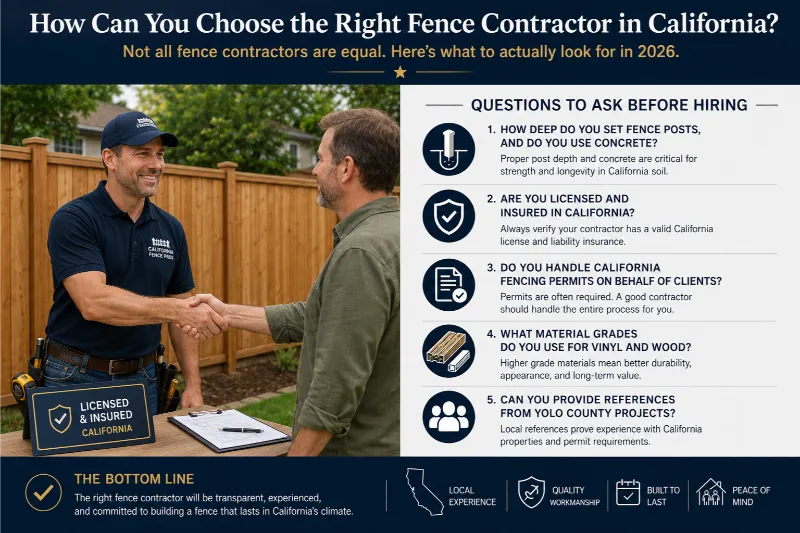
Questions to Ask Before Hiring
- How deep do you set fence posts, and do you use concrete?
- Are you licensed and insured in California?
- Do you handle California fencing permits on behalf of clients?
- What material grades do you use for vinyl and wood?
- Can you provide references from Yolo County projects?
Red Flags to Avoid
Avoid contractors who cannot provide a written estimate, refuse to pull permits, or pressure you into same-day decisions. A legitimate “local fencing company” walks you through the process patiently and transparently.
Why Local Experience Matters
A contractor who has installed fences in Yolo County knows the local clay soil issues, the HOA requirements in Woodland and Davis neighborhoods, and the California building codes that govern fence height and placement. Our “California backyard renovation experts” at Yolo Landscapes bring that local knowledge to every project. You can reach us at (530) 207-9961 for a free 2026 quote.
So, Which Fence Is Better for Your California Home?
Here is my honest recommendation after working with hundreds of California homeowners.
Best Choice for Budget-Conscious Homeowners
If your budget is tight and you are comfortable with annual maintenance, cedar fencing is a beautiful and capable option. In 2026, budget $18 to $28 per linear foot for installation and $225 to $500 every two to three years for maintenance.
Best Choice for Long-Term Durability
If you want the fence that performs best over 20 to 30 years in California’s climate with the least ongoing cost and effort, vinyl fence installation in California is the clear winner. The higher upfront cost pays for itself in avoided maintenance within seven to ten years.
Best Choice for Luxury Properties
High-end homes in California often use premium cedar fencing or redwood fencing for their natural character, especially in landscaping-forward environments. For luxury properties where visual authenticity matters more than maintenance convenience, wood wins aesthetically.
Final Expert Recommendation
My honest take? If you are asking this question because you are replacing a fence that failed, go with vinyl. If you are installing for the first time and genuinely love hands-on yard care, cedar is worth it. If you are still unsure, talk to our “local landscaping specialists” at Yolo Landscape. We will walk through your specific yard, your HOA rules, and your 2026 budget before recommending anything.
Conclusion
The wood vs vinyl fence question does not have a universal answer. It has the right answer for your specific home, budget, and lifestyle in 2026.
After years of installing and maintaining fences across Yolo County, the pattern is clear. Homeowners who choose vinyl almost never regret it for practical reasons. Homeowners who choose cedar and commit to maintaining it almost never regret it either. The ones who struggle are those who chose wood assuming it would take care of itself.
California’s climate demands respect from any fencing material. Choose wisely, install professionally, and maintain consistently. That homeowner in Woodland who called us frustrated with her failed wood fence? She replaced it with quality vinyl this spring. No regrets.
If you are ready to get the right fence for your California home, our “outdoor living enhancement ideas” and fencing expertise are just a call away. Reach Yolo Landscape at (530) 207-9961 or visit our “fence installation in Yolo County” page for a free 2026 quote. We serve Woodland, Davis, West Sacramento, Winters, and all surrounding Yolo County communities.
What is your biggest concern when choosing between wood and vinyl for your backyard? Leave a comment below and we will answer it directly.